Autoclaved Aerated Concrete (AAC) Blocks: Benefits, Specifications, Prices & Applications
Autoclaved Aerated Concrete (AAC) blocks, commonly known as lightweight white blocks or insulating white blocks, have become one of the most widely used building materials in modern construction. Their lightweight structure, excellent thermal insulation, and ease of installation make them a preferred choice for residential, commercial, and industrial projects across Saudi Arabia and the Gulf region.
As sustainable construction and energy efficiency become increasingly important, AAC blocks continue to gain popularity for their ability to improve building performance while reducing structural loads.
What Are AAC Blocks?
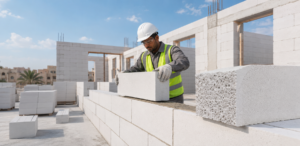
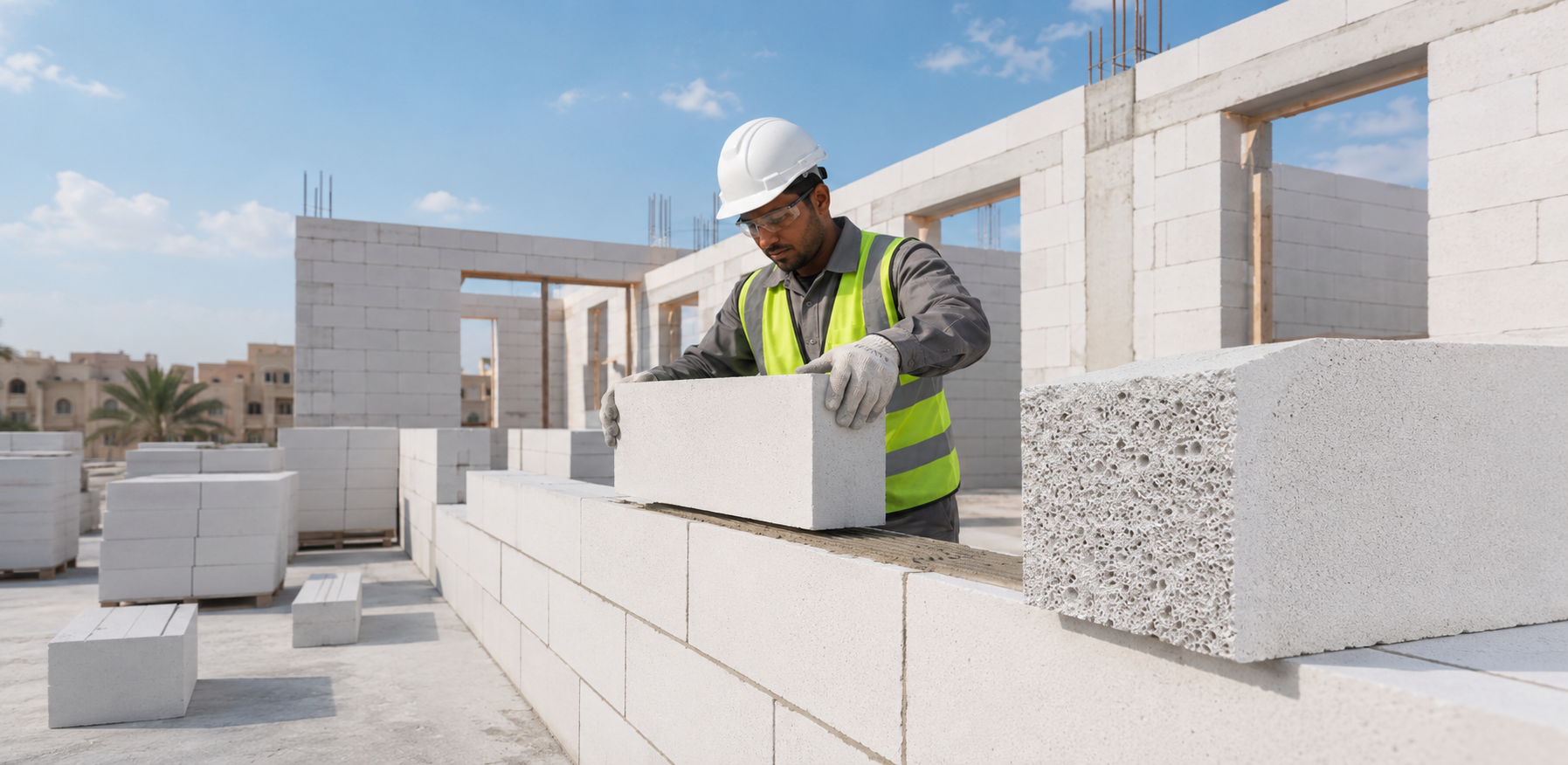
Autoclaved Aerated Concrete (AAC) blocks are lightweight precast building materials manufactured from cement, lime, silica sand, water, and aluminum powder. The mixture undergoes a high-pressure steam curing process inside an autoclave, creating millions of tiny air pockets throughout the material.
These air cells give lightweight white blocks their unique combination of low weight, excellent thermal insulation, and good acoustic performance.
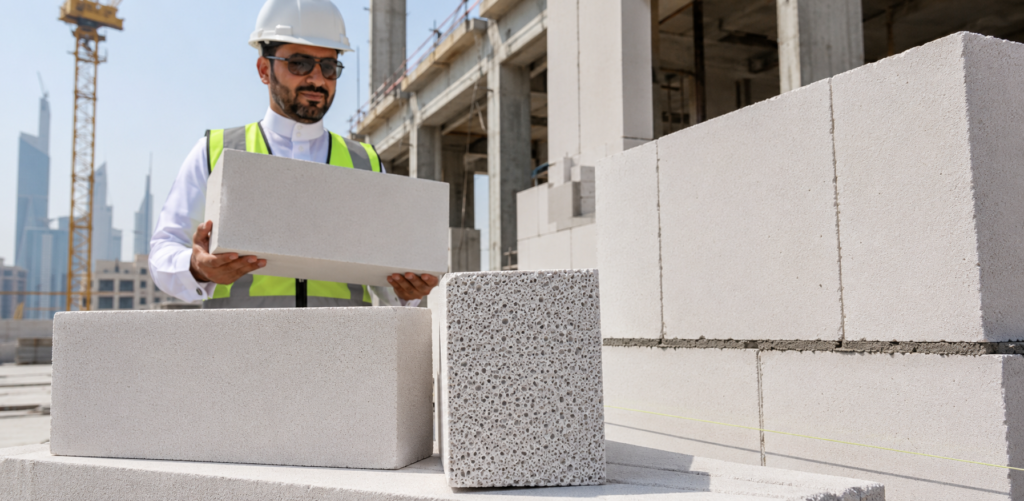
Specifications of Insulating AAC Blocks
The specifications of insulating AAC blocks vary depending on the manufacturer and project requirements, but they generally offer:
- Lightweight construction.
- High thermal insulation.
- Good sound insulation.
- Excellent fire resistance.
- Dimensional accuracy.
- Easy cutting and shaping.
- Reduced mortar or adhesive consumption.
- Improved energy efficiency.
These characteristics make AAC blocks suitable for both interior and exterior wall applications.
Pros and Cons of Lightweight White Blocks
Like any construction material, lightweight white blocks offer several advantages as well as some considerations.
| Advantages | Disadvantages |
Significantly lighter than conventional concrete blocks. | Usually require specialized thin-bed adhesive instead of traditional mortar. |
Excellent thermal insulation, helping reduce cooling energy consumption. | Proper installation techniques are necessary to achieve optimal performance. |
| Better acoustic insulation. | Initial material cost may be higher than conventional concrete blocks, although long-term operational savings often offset the difference. |
| Faster and easier installation. | |
| High fire resistance. | |
Easier routing for electrical and plumbing services. | |
Reduced structural loads on beams, columns, and foundations. |
AAC Blocks vs. Concrete Blocks
One of the most common questions is the comparison between AAC blocks and concrete blocks.
| AAC Blocks | Concrete Blocks |
| Lightweight | Heavier |
| Superior thermal insulation | Lower thermal insulation |
| Better sound insulation | Moderate sound insulation |
| Easy to cut and shape | More difficult to modify |
| Reduces structural loads | Increases structural weight |
The most suitable option depends on the building type, structural design, environmental conditions, and project objectives.
AAC Block Factories
The quality of AAC products largely depends on the manufacturing process. Reliable AAC block factories use advanced production technologies and strict quality control systems to ensure consistent dimensions, compressive strength, and thermal performance.
Choosing products from certified manufacturers helps improve construction quality and long-term building performance.
White Block Suppliers
When selecting white block suppliers, consider the following:
- Product quality.
- Compliance with industry standards.
- Reliable delivery schedules.
- Production capacity.
- Technical support.
- After-sales service.
Working with experienced suppliers helps minimize construction delays and ensures consistent material quality throughout the project.
AAC Block Prices
The price of AAC blocks depends on several factors, including:
- Block dimensions.
- Density.
- Compressive strength.
- Order quantity.
- Manufacturer.
- Transportation costs.
- Project location.
Because these factors vary from project to project, obtaining a quotation based on project specifications is the most accurate way to estimate costs.
Why Are Insulating White Blocks Becoming More Popular?
The growing demand for insulating white blocks is driven by modern building requirements focused on sustainability and energy efficiency.
AAC blocks improve thermal insulation, reduce air-conditioning energy consumption, lower structural loads, and accelerate construction, making them an ideal solution for modern residential and commercial developments.
Conclusion
Autoclaved Aerated Concrete (AAC) blocks provide an advanced building solution that combines lightweight construction, superior insulation, fire resistance, and installation efficiency. Whether used in residential, commercial, or industrial projects, they contribute to improved building performance and long-term sustainability.
At Atwar Alkon, we are committed to delivering high-quality construction solutions using reliable building materials that meet modern engineering standards and support durable, energy-efficient projects.
Frequently Asked Questions
What are AAC blocks?
AAC blocks are lightweight precast concrete blocks manufactured using autoclaved aerated concrete technology. They provide excellent thermal insulation, sound insulation, and fire resistance.
Are insulating white blocks better than concrete blocks?
It depends on the project requirements. Insulating white blocks offer better thermal performance and lower weight, while conventional concrete blocks may be suitable for certain structural applications.
What affects the price of AAC blocks?
AAC block prices depend on block size, density, compressive strength, manufacturer, transportation, order quantity, and project location.
Why are lightweight white blocks widely used?
They reduce structural loads, improve energy efficiency, provide better insulation, and simplify construction compared to many traditional masonry materials.