Block and Beam Concrete Roof Systems: Benefits, Cost & When to Use Hordi Roofs
Block and beam concrete roof systems, commonly known as the Hordi roof system, have become one of the most widely used structural solutions for residential and commercial construction across the Middle East. Combining reinforced concrete beams with Hordi blocks for roofs, this system offers an efficient balance between structural strength, reduced concrete consumption, and cost-effectiveness.
As modern construction projects increasingly focus on faster execution and optimized material usage, the Hordi roof system continues to be a preferred choice for engineers, contractors, and developers.
What Is the Hordi Roof System?
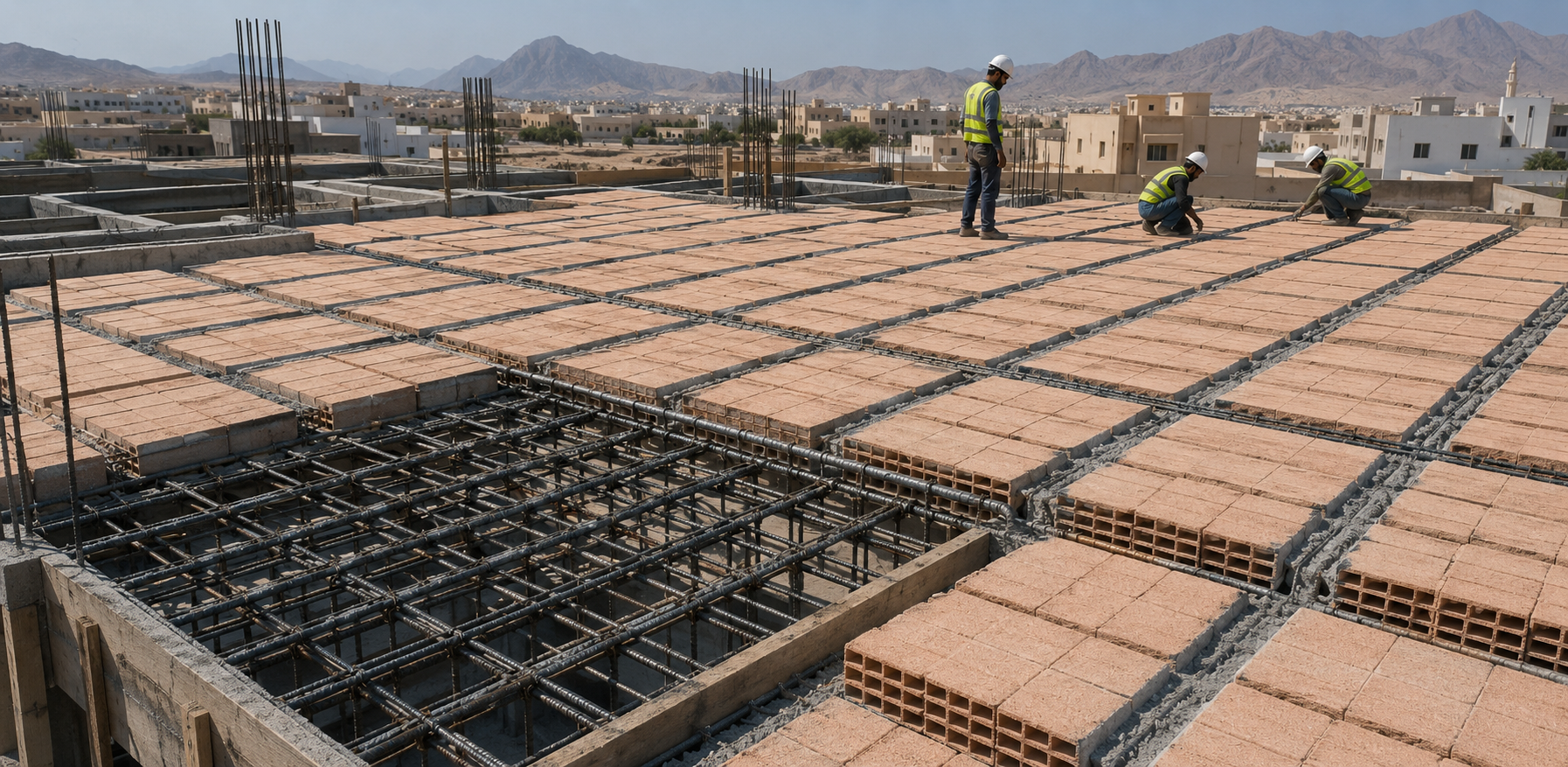
The Hordi roof system is a reinforced concrete flooring system consisting of concrete beams, hollow blocks (Hordi blocks), reinforcement steel, and a concrete topping slab. The hollow blocks act as permanent fillers between the beams, reducing the amount of concrete required while maintaining the roof’s structural integrity.
This system produces a lighter roof compared to traditional solid concrete slabs without compromising structural performance when properly designed.
Main Components of a Block and Beam Roof System
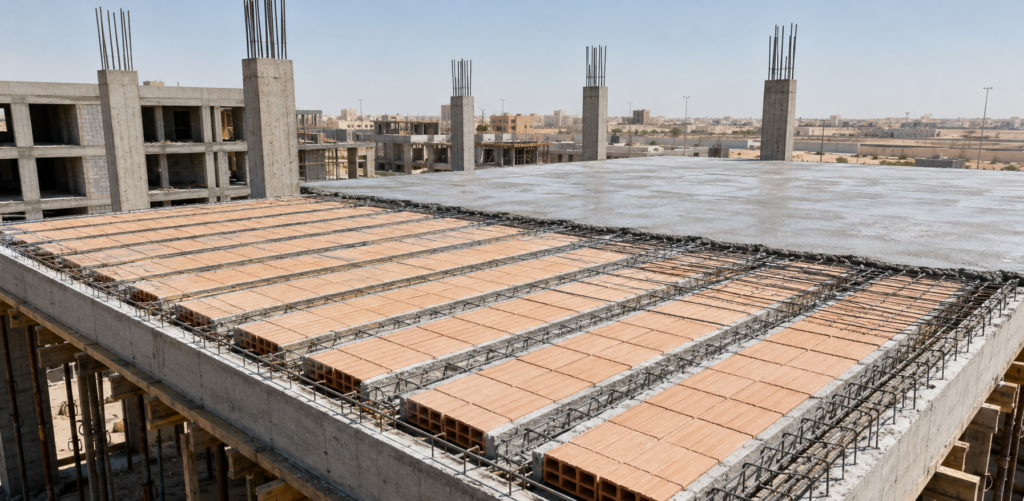
A typical block and beam concrete roof system includes:
- Reinforced concrete beams.
- Hordi blocks for roofs (concrete, clay, or lightweight blocks).
- Reinforcement steel.
- Concrete topping slab.
- Structural connections and support elements.
Each component plays a critical role in distributing loads efficiently throughout the structure.
Advantages of Block and Beam Concrete Roof Systems
The popularity of the block and beam concrete roof system comes from its many structural and economic benefits.
Reduced Structural Weight
Using hollow blocks significantly decreases the dead load compared to solid concrete slabs, reducing loads on columns and foundations.
Lower Concrete Consumption
Because hollow blocks replace part of the concrete volume, the system requires less concrete, improving material efficiency.
Cost Efficiency
The combination of reduced concrete usage, lower reinforcement requirements in certain applications, and faster construction often results in lower overall project costs.
Better Thermal and Acoustic Performance
The hollow cavities within Hordi blocks improve thermal insulation and help reduce sound transmission between floors.
Faster Construction
The system simplifies on-site construction and allows contractors to complete roof works more efficiently.
Difference Between Hordi Roofs and Solid Slab Roofs
One of the most common questions is the difference between Hordi roofs and solid slab roofs.
A solid slab roof consists of a full reinforced concrete slab across the entire floor area. While it provides excellent structural capacity, it also requires more concrete and has a higher self-weight.
In contrast, the Hordi roof system incorporates hollow blocks between reinforced concrete beams. This reduces the slab’s weight, lowers material consumption, and improves insulation while maintaining structural efficiency.
The appropriate system depends on span length, structural loads, architectural requirements, and project budget.
When Should the Hordi Roof System Be Used?
The Hordi roof system is commonly selected for projects that require:
- Residential villas.
- Apartment buildings.
- Schools and educational facilities.
- Office buildings.
- Commercial developments.
- Buildings where reduced structural weight is beneficial.
- Projects seeking improved thermal insulation.
Structural engineers determine whether the system is suitable based on engineering calculations and project requirements.
Cost of the Block and Beam System
The cost of the block and beam system depends on several factors, including:
- Building design.
- Roof area.
- Span lengths.
- Type of Hordi blocks.
- Concrete grade.
- Reinforcement quantities.
- Labor costs.
- Project location.
Although costs vary from one project to another, the Hordi system can provide significant savings by reducing concrete consumption and structural weight while improving construction efficiency.
Choosing a Company for Hordi Roof Construction
Selecting experienced companies specializing in Hordi roof construction is essential for achieving quality results.
When choosing a contractor, consider:
- Experience with block and beam systems.
- Qualified structural engineering team.
- Compliance with engineering codes and standards.
- High-quality materials.
- Proven construction experience.
- Strong quality control procedures.
- Ability to complete projects on schedule.
A qualified contractor helps ensure structural safety, construction quality, and long-term building performance.
Conclusion
The block and beam concrete roof system, or Hordi roof system, remains one of the most practical roofing solutions for modern construction. By combining reinforced concrete beams with Hordi blocks for roofs, it offers reduced structural weight, faster construction, improved insulation, and cost efficiency.
At Atwar Alkon, we provide professional structural construction solutions backed by engineering expertise, high-quality execution, and a commitment to delivering durable roofing systems that meet the highest industry standards.
Frequently Asked Questions
What is the Hordi roof system?
The Hordi roof system is a block and beam roofing system that combines reinforced concrete beams with hollow blocks to reduce weight while maintaining structural strength.
What are Hordi blocks used for?
Hordi blocks are used as permanent fillers between concrete beams to reduce concrete consumption and improve thermal and acoustic insulation.
Is the Hordi roof system more economical than a solid slab?
In many projects, yes. Reduced concrete usage and lower structural weight can help decrease overall construction costs, depending on the project design.
When is the Hordi roof system recommended?
It is commonly used in residential, commercial, educational, and office buildings where reduced structural weight and construction efficiency are important.