
Beam & Block Flooring System: An Advanced Construction Solution for Modern Building Projects
The construction industry is continuously evolving to meet growing demands for faster project delivery, higher quality standards, and improved cost efficiency. As developers, contractors, and engineers seek innovative construction methods, modern flooring systems have become a critical component in achieving these objectives.
Among the most effective structural flooring solutions used worldwide is the Beam & Block Flooring System. This system combines precast concrete beams with infill blocks to create durable, efficient, and cost-effective floor structures suitable for residential, commercial, industrial, and institutional projects.
As construction markets increasingly adopt prefabrication and off-site manufacturing techniques, Beam & Block Flooring has gained significant attention for its ability to accelerate construction schedules while maintaining excellent structural performance.
In this article, we explore the engineering principles behind the Beam & Block Flooring System, its key components, advantages, applications, and its growing role in modern construction.
What Is a Beam & Block Flooring System?
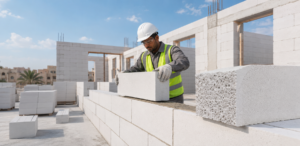
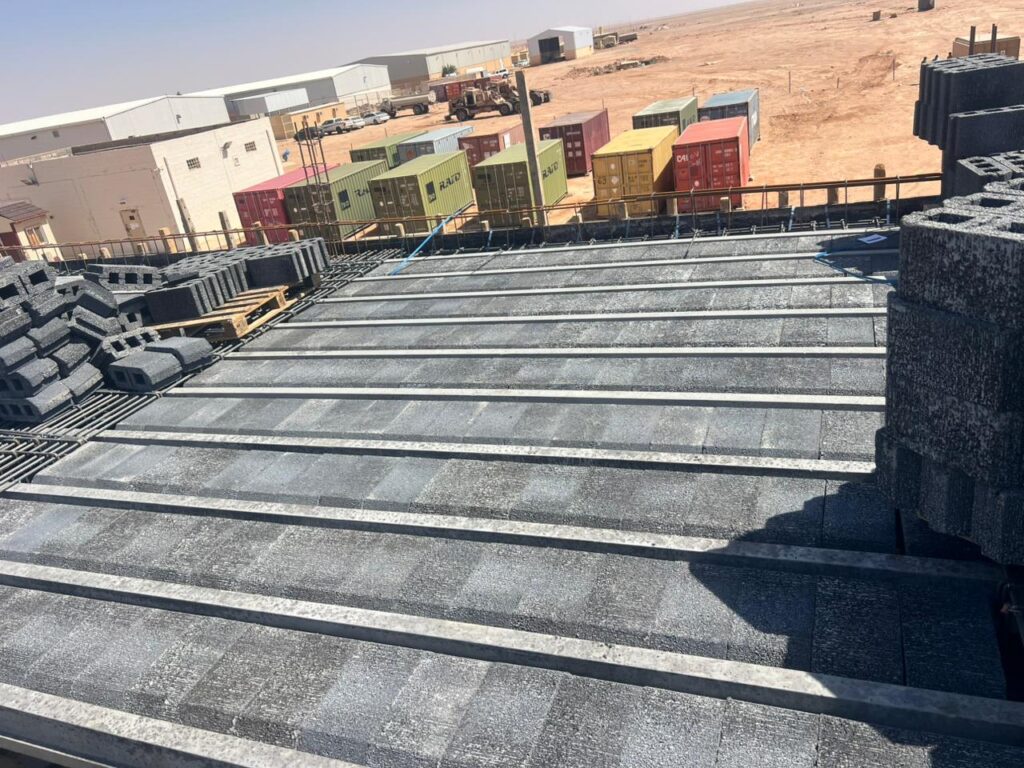
The Beam & Block Flooring System is a structural floor construction method that uses precast concrete beams installed at predetermined centers, with concrete or lightweight infill blocks placed between them.
Once the beams and blocks are assembled, a structural concrete topping may be added when required by the design specifications. The result is a stable, load-bearing floor system capable of supporting various structural and operational loads.
The system is widely used because it combines the benefits of precast construction with efficient load distribution and reduced on-site labor requirements.
Main Components of a Beam & Block Flooring System
A typical Beam & Block floor consists of four primary elements:
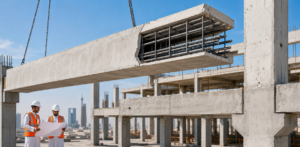
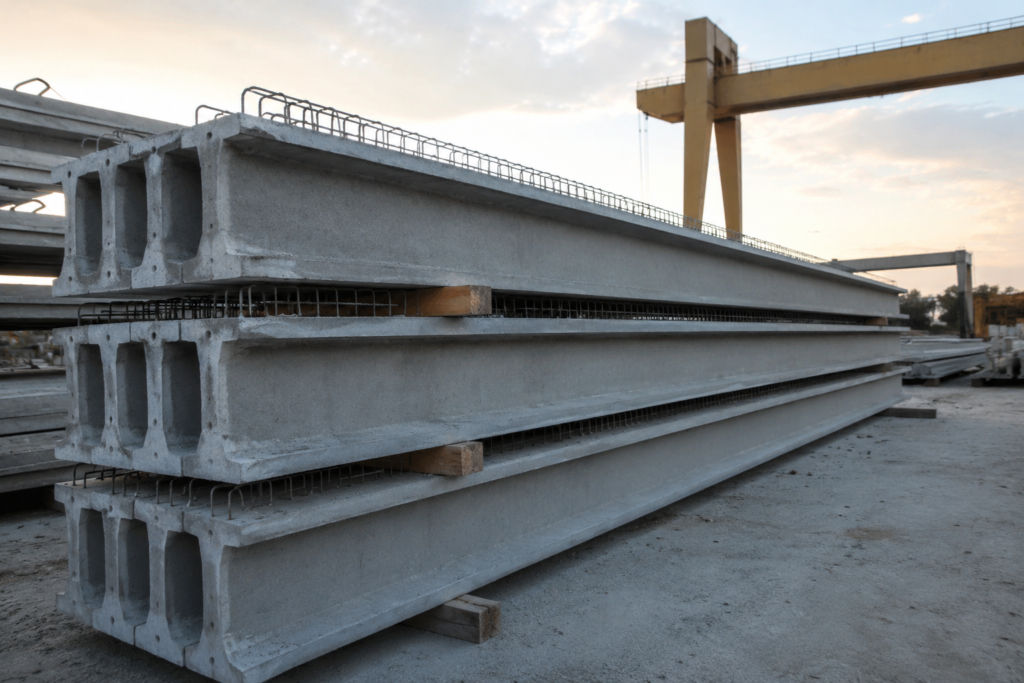
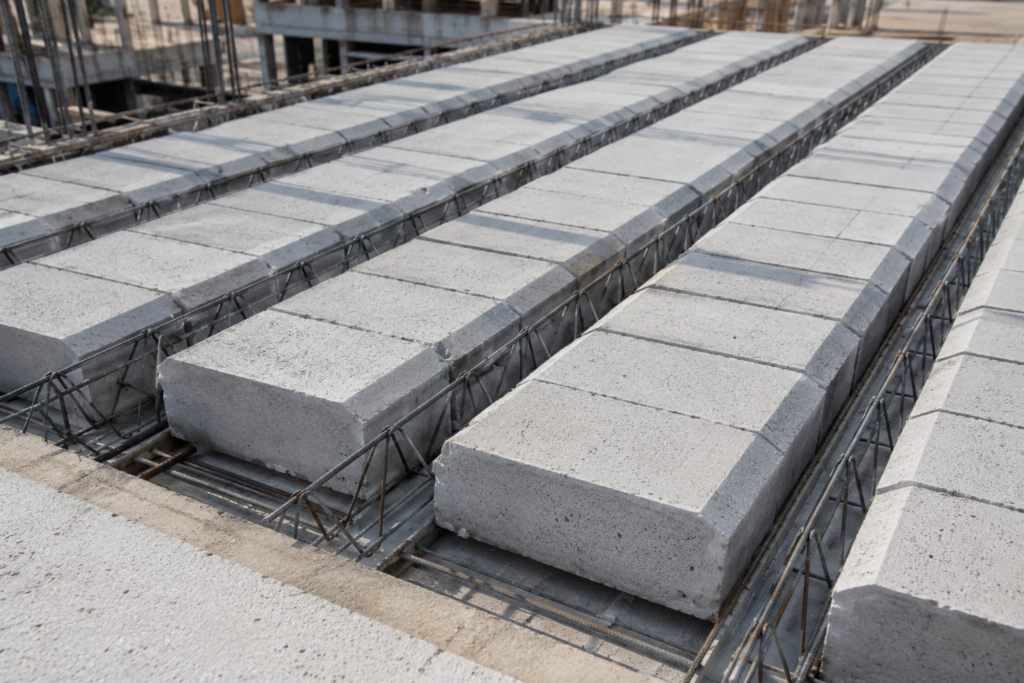
1. Precast Concrete Beams
These beams are manufactured under controlled factory conditions and are designed to carry the majority of structural loads. Depending on project requirements, they may be prestressed or reinforced with conventional steel reinforcement.
2. Infill Blocks
Infill blocks are placed between the beams to form the floor surface.
Common block types include:
- Concrete blocks
- Lightweight aggregate blocks
- Insulated blocks
- Acoustic performance blocks
Although these blocks contribute to the floor structure, their primary function is to reduce self-weight and provide a working platform during construction.
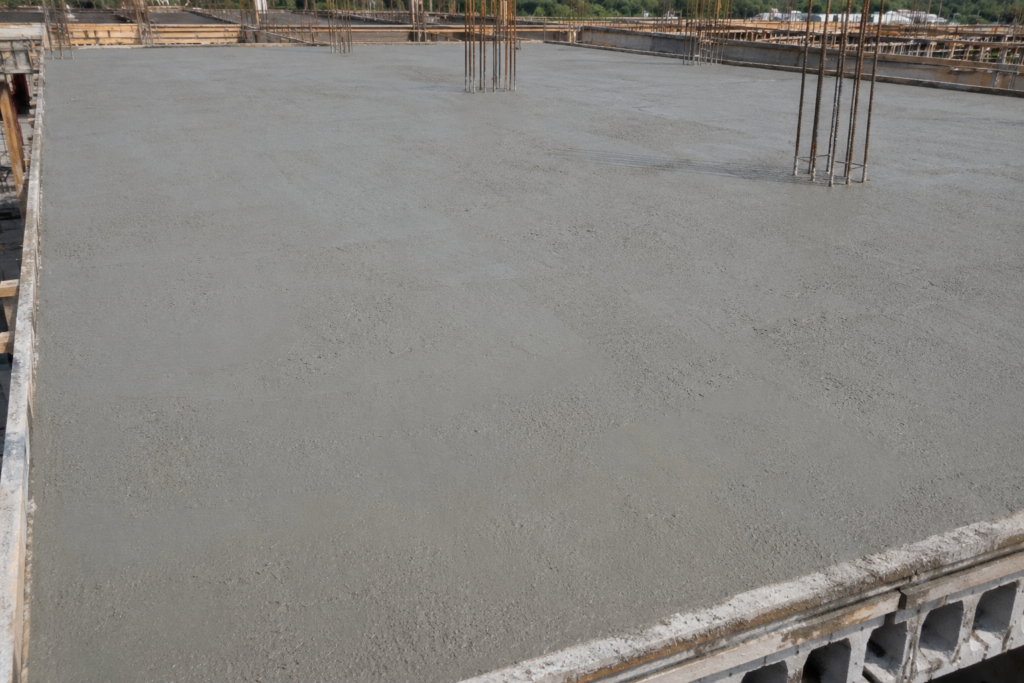
3. Structural Concrete Topping
A reinforced concrete topping layer may be applied to improve load distribution, increase diaphragm action, and enhance overall floor stiffness.
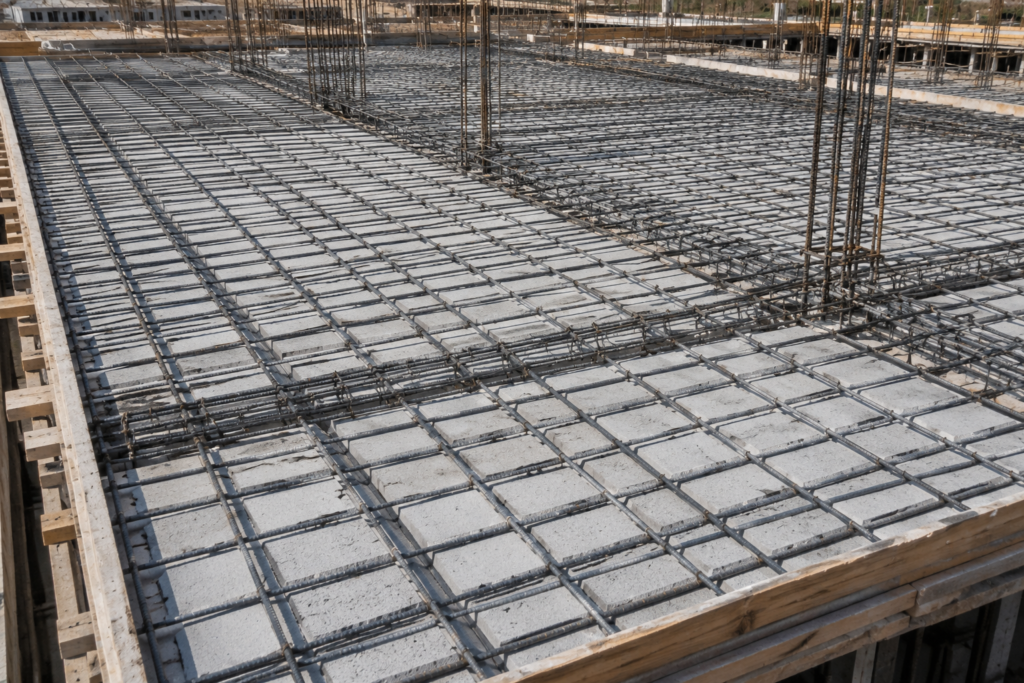
4. Additional Reinforcement
Depending on design loads and local building codes, supplementary reinforcement may be required in selected areas to achieve the desired structural performance.
How Does the System Work Structurally?
The Beam & Block Flooring System functions by transferring loads from the floor surface and occupancy loads through the infill blocks and concrete topping to the precast beams.
The beams then transfer these loads to supporting walls, columns, or structural frames.
This load path allows engineers to achieve efficient structural behavior while minimizing unnecessary material usage. Because the infill blocks significantly reduce the overall dead load of the floor, the system can contribute to more economical foundation and structural designs.
Engineering Advantages of Beam & Block Flooring
Faster Construction
One of the most significant advantages of the system is its speed of installation.
Since the primary structural elements are manufactured off-site, installation can proceed rapidly once materials arrive on-site. This reduces project timelines and allows contractors to achieve earlier completion dates.
Additionally, the system is less dependent on weather conditions than traditional cast-in-place concrete floors.
Improved Quality Control
Precast concrete beams are produced in factory environments where material quality, curing conditions, and dimensional accuracy can be closely monitored.
This controlled manufacturing process results in:
- Consistent product quality
- Reduced construction defects
- Better compliance with design specifications
Reduced Dead Loads
Compared to many traditional solid concrete slab systems, Beam & Block floors often provide lower self-weight.
The reduction in dead loads offers several structural benefits:
- Smaller foundation requirements
- Lower structural loads on columns and walls
- Improved overall structural efficiency
Reduced Formwork Requirements
Traditional concrete slabs often require extensive temporary formwork and shoring systems.
Beam & Block Flooring significantly reduces or eliminates these requirements, resulting in:
- Lower labor costs
- Reduced material consumption
- Improved site safety
- Faster installation
Design Flexibility
The system can accommodate a wide range of architectural and structural layouts.
It is suitable for:
- Residential developments
- Commercial buildings
- Educational facilities
- Healthcare projects
- Mixed-use developments
The system also allows relatively easy integration of mechanical, electrical, and plumbing services.
Thermal and Acoustic Performance
Building performance is increasingly important as developers focus on sustainability and occupant comfort.
When appropriate infill blocks are selected, Beam & Block Flooring can contribute to improved thermal insulation by reducing heat transfer through the floor structure.
Benefits include:
- Enhanced energy efficiency
- Reduced HVAC operating costs
- Improved indoor comfort
Similarly, specialized block types can improve acoustic performance by reducing sound transmission between occupied spaces.
These characteristics make the system particularly attractive for residential, hospitality, healthcare, and educational buildings.
Beam & Block Flooring vs. Traditional Concrete Slabs
Construction Speed
Beam & Block systems typically outperform conventional cast-in-place slabs due to the extensive use of prefabricated components.
Quality Assurance
Factory-controlled manufacturing provides greater consistency than site-based concrete operations, which can be influenced by weather, labor quality, and construction conditions.
Cost Efficiency
While costs vary depending on project size, location, and logistics, Beam & Block Flooring often provides economic benefits through:
- Reduced labor requirements
- Faster project delivery
- Lower formwork costs
- Reduced construction waste
Sustainability
The system aligns with sustainable construction principles by minimizing waste generation and reducing material consumption associated with traditional formwork systems.
Common Applications of Beam & Block Flooring
Residential Buildings
Beam & Block Flooring is extensively used in:
- Villas
- Apartment buildings
- Residential compounds
- Affordable housing developments
Commercial Projects
The system is suitable for:
- Office buildings
- Retail developments
- Mixed-use facilities
- Commercial complexes
Educational Facilities
Schools, colleges, and universities benefit from the system’s speed of construction and long-term durability.
Industrial Buildings
Certain industrial applications can effectively utilize Beam & Block floors where loading requirements align with the system’s structural capabilities.
Large-Scale Developments
Major urban developments often adopt Beam & Block systems to accelerate construction programs while maintaining consistent quality standards.
Key Engineering Considerations
Although Beam & Block Flooring offers numerous advantages, successful implementation depends on proper engineering and execution.
Important considerations include:
Structural Design
Engineers must ensure that beam spacing, block selection, reinforcement requirements, and load capacities comply with applicable building codes and project specifications.
Manufacturing Quality
The performance of the system depends heavily on the quality of precast components. Therefore, sourcing materials from reputable manufacturers is essential.
Installation Expertise
Proper installation is critical to achieving intended structural behavior. Construction teams should follow approved installation procedures and quality assurance protocols.
Coordination Between Disciplines
Close collaboration between structural, architectural, mechanical, and electrical teams is necessary to ensure efficient integration of all building systems.
The Role of Beam & Block Flooring in the Future of Construction
As the global construction industry continues to embrace prefabrication, digital construction technologies, and sustainable building practices, systems such as Beam & Block Flooring are becoming increasingly relevant.
Modern construction projects require solutions that offer:
- Faster project delivery
- Improved quality control
- Greater cost efficiency
- Enhanced sustainability
- Reduced labor dependency
Beam & Block Flooring addresses these challenges effectively, making it an attractive choice for contractors, developers, and engineers seeking high-performance structural solutions.
Its compatibility with modern construction methodologies positions it as a key component in the future of efficient building delivery.
Conclusion
The Beam & Block Flooring System has established itself as one of the most effective flooring solutions in modern construction. By combining precast concrete beams with lightweight infill blocks, the system delivers excellent structural performance, faster installation, improved quality control, and enhanced economic efficiency.
For engineers, contractors, and developers looking to optimize project delivery while maintaining high construction standards, Beam & Block Flooring offers a proven and reliable solution. As the construction sector continues to evolve toward smarter and more sustainable practices, the adoption of this system is expected to grow across residential, commercial, and infrastructure projects worldwide.
FAQ
What is a Beam & Block Flooring System?
It is a structural flooring solution that uses precast concrete beams and infill blocks to create durable and efficient floor structures.
What are the main advantages of Beam & Block Flooring?
The system provides faster construction, improved quality control, reduced dead loads, lower formwork requirements, and greater cost efficiency.
Is Beam & Block Flooring suitable for residential projects?
Yes. It is widely used in villas, apartment buildings, housing developments, and residential compounds.
Does Beam & Block Flooring reduce construction costs?
In many cases, yes. Reduced labor, faster installation, and lower formwork requirements can contribute to overall project savings.
Is Beam & Block Flooring sustainable?
Yes. The system reduces construction waste, minimizes material usage, and supports modern sustainable building practices.