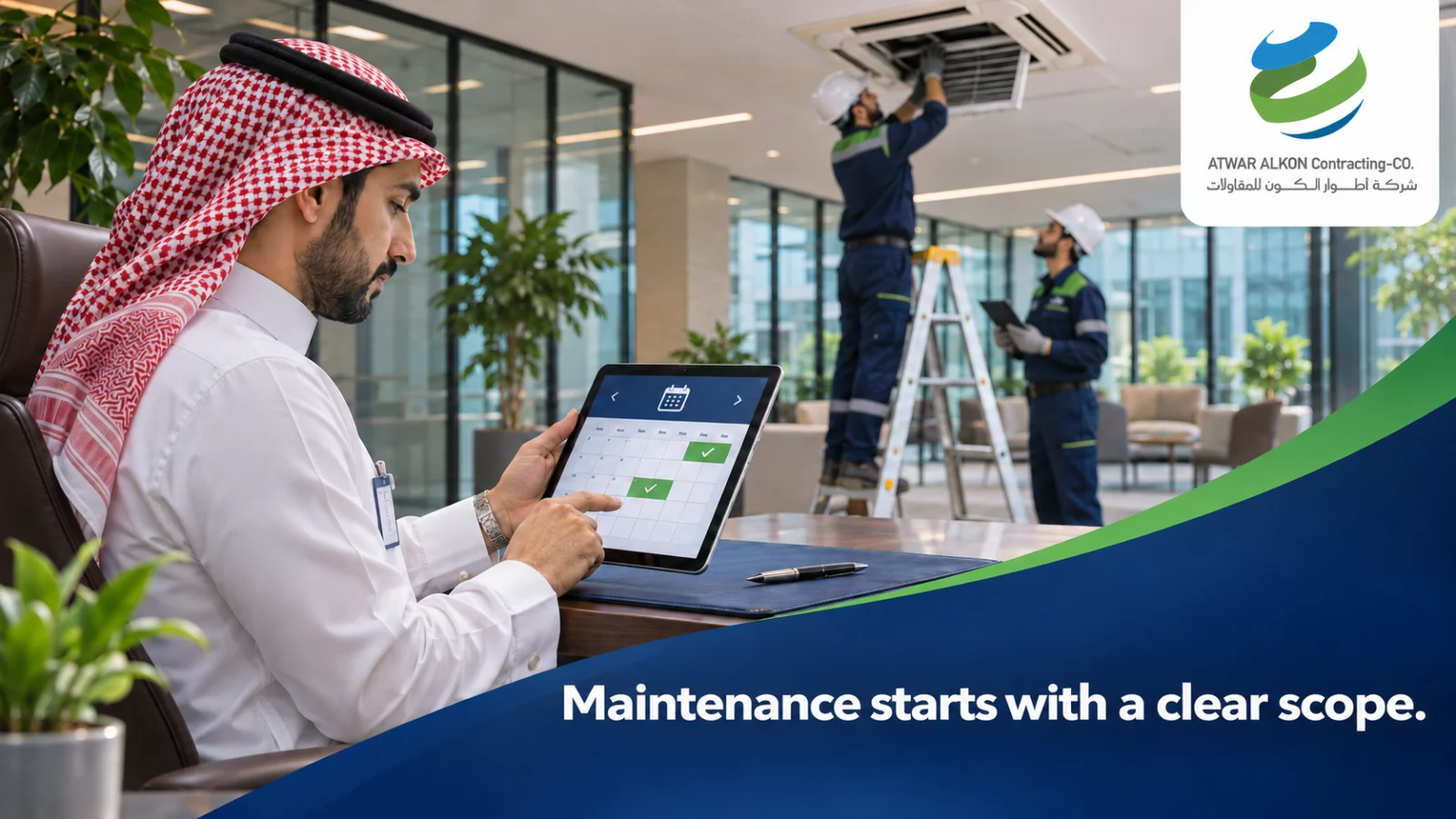
Defining an operation and maintenance scope turns a broad phrase such as ‘building maintenance’ into services that can be monitored. Owners need to identify covered assets, activities, materials, spare parts and the way response and closure are recorded. These points should form a clear service package suited to the facility.
Start with covered assets
Identify buildings, areas, systems and equipment, including references, locations and available condition information. Mark assets covered by separate warranties or contracts to avoid overlapping responsibilities. Where needed, complete a site review before using the register as the basis of a final price or service commitment.
Distinguish activities
Separate scheduled preventive work, fault response, inspection and daily operation as required. Define outputs such as visit reports or work order records. Identify work needing additional approval or a different specialist. A general maintenance heading should not be treated as automatic inclusion of every possible intervention.
| Item | What to review | Required record |
|---|---|---|
| Asset | Identity, location, condition | Included or excluded |
| Service | Activity and deliverables | Assigned provider |
| Materials | Consumables and parts | Included or approval needed |
Clarify materials and spare parts
Establish who supplies consumables, replacement parts and tools, and which costs sit outside the price. Record the approval process for purchases and additional work. Clear arrangements help prevent response delays caused by different expectations when an actual fault requires materials or an external service.
Define response and closure
Agree request categories, reporting channels, service hours and how agreed times are measured. Distinguish acknowledgement, attendance, diagnosis, repair and closure. Avoid one universal target for every asset and circumstance. Service priorities, spare parts availability and agreed conditions should inform the commitments documented by the parties.
Review performance through records
Reports should show completed work, recurring observations, open requests and reasons for delays. Keep asset records and instructions current after changes, and define information handover when the service ends. Regular reviews can improve scope around the facility’s actual needs instead of judging performance only by visit counts.
Practical tip
Show responsibility, deliverables and exclusions together for each activity.
Frequently asked questions
Are spare parts always included?
The offer and contract define whether they are included or quoted and approved separately.
Is response time the same as repair time?
They describe different stages. Define when each starts and ends and the conditions that affect it.
Your next step with Atwar Al Kon
Review the relevant service scope: Operation & Maintenance Services.
Start with your project information
Share the available drawings, project location and required scope with Atwar Al Kon to identify the information needed and discuss a suitable service package.